Blog

The VIVE-Trust Talent Pool Promotes Employability in Difficult Times

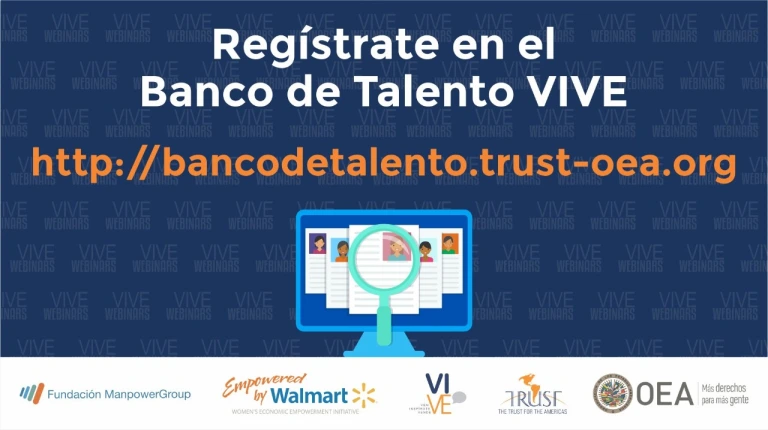
The VIVE Project, which has been in operation since 2016 thanks to support from the Walmart Foundation, has trained over 54,000 Mexican women in technical and life skills to help them achieve better economic opportunities. Nearly 20% of our graduates received assistance from our team in their search for employment or in starting their own businesses. However, in March 2020, we faced a global challenge that required us to rethink not only our training program but also the strategy through which we provide additional support to our most vulnerable communities, without having direct contact with either our beneficiaries or our partners. In response to the COVID-19 crisis, VIVE moved all of its activities to accessible virtual platforms, including social media to foster direct interaction with our target population, and designed Monitoring & Evaluation tools to help us develop our plan. Through these surveys, we discovered that one of the most pressing challenges for our alumni community is the overall negative impact of the national economic downturn. According to official data, more than a million jobs have been lost in three months across Mexico, and it is also a very difficult time for micro and small businesses to thrive, with many of them going out of business. To strengthen our employability component, we created a Talent Pool that will gather relevant information about our beneficiaries’ needs and profiles in order to match them with potential employers who meet their eligibility criteria and provide guidance during the selection process. The VIVE-Trust Talent Pool, known in Spanish as Banco de Talento VIVE-Trust,was launched during a virtual event on July 9 via the project’s official Facebook page (@ProyectoVIVEMx) and included a step-by-step tutorial on how to register, as well as an invitation to all women to join VIVE in order to access this tool and other program benefits. Likewise, the first video from the Virtual Job Fair—a complementary project to the talent pool—was presented during the event, outlining the path to employment at Manpower Group. The highlight of the event was an interview with Eduardo Almanza, Regional Manager of Training and Employability at Manpower Group, a long-standing partner of the VIVE project. Mr. Almanza assured the audience of over 160 viewers that jobs are available during the pandemic and that most companies are working closely with the government to ensure a safe return to economic activities. He also emphasized how well the VIVE training aligns with market needs, noting that employers are seeking people with strong life skills, such as leadership and teamwork. Eduardo also reflected on the gender gap in the workforce and how confidence is key for women to attain the positions they desire. He advised women to recognize their strengths, identify the opportunities that best align with their interests, and ultimately, go out and give it a try—since the only way to achieve our goals is by trying as many times as necessary. The full interview is available in Spanish on our YouTube channel. Registration for the VIVE-Trust Talent Pool is completely free and voluntary, and can be accessed by clicking on the following link: http://bancodetalento.trust-oea.org/ The only requirement is that the interested person has successfully completed any VIVE training course, including those from our Virtual Classroom (Aula Virtual). For more information on how to register or to join the initiative as a potential employee, please write to oportunidades@20.9.190.97 About the VIVE Project: VIVE means ”Come, be inspired, and sell” in Spanish. The Walmart Foundation supports this project, implemented in Mexico by Trust for the Americas in partnership with the ManpowerGroup Foundation. Since 2016, VIVE has sought to increase the economic empowerment of Mexican women through training in technical skills such as sales, retail, and customer service, as well as life skills like entrepreneurship, effective communication, and leadership. The training is aimed at low-income women over the age of 15 from vulnerable communities. VIVE has operated in 184 municipalities across 28 Mexican states. In 2018, Trust added a course on the prevention of violence against girls and women to the curriculum. In this way, the project’s objective is to help participants increase their chances of accessing formal economic opportunities in these areas, as well as to help prevent gender-based violence. About Walmart: Together, Walmart and the Walmart Foundation generally provide more than $1 billion in cash and in-kind contributions to support programs that align with its philanthropic priorities. The Walmart Foundation focuses on areas where it can do the most good—combining the unique strengths of the business with philanthropy. The ability to draw on Walmart’s business strengths—providing more than just funding—helps Walmart’s philanthropy deliver greater societal impact. Today, Walmart.org, through the combined philanthropic efforts of both Walmart and the Walmart Foundation, creates opportunities for people to live better every day.

The VIVE-Trust Talent Pool Promotes Employability in Difficult Times Read More »
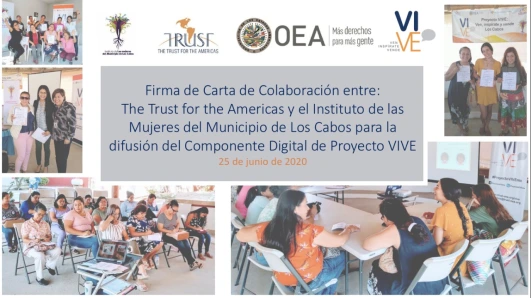
Firma Virtual de Colaboración entre The Trust for the Americas y el Instituto de las Mujeres del Municipio de Los Cabos

Texto: Laura Hernández, María Fernanda Barragán y Úrsula Sánchez. El pasado 25 de Junio del 2020, se llevó a cabo de manera virtual a través de la Plataforma de Microsoft Teams, la firma de la Carta de Colaboración entre The Trust for the Americas y el Instituto de las Mujeres del Municipio de Los Cabos, para la difusión de la Estrategia de Capacitación y Oportunidades Económicas en el Contexto del COVID-19 de Proyecto VIVE. El evento estuvo conducido por Úrsula Sánchez, Consultora de Oportunidades Económicas de Proyecto VIVE, quien moderó la conversación con la formalidad de un evento presencial, a pesar de ser el primer evento virtual de esta naturaleza. En el presídium participaron, Lorena Cortés Torralbo, Directora General del Instituto de las Mujeres del Municipio de Los Cabos; Claudia González, emprendedora de GOGA Jabones y egresada de Proyecto VIVE de Los Cabos; Lara Bersano, Directora de Comunicación de Trust for the Americas; María Fernanda Sierra Perea, Gerente de Proyecto VIVE y Klaudia González, Coordinadora Nacional de Proyecto VIVE. Todas compartieron reflexiones importantes sobre los retos que ha implicado la contingencia ocasionada por el COVID-19 en la economía, la salud mental y las tareas de cuidados que realizan las mujeres; por lo que en este contexto resulta fundamental el trabajo que tanto el Trust for the Americas, como el Instituto de las Mujeres realizan para acompañar y brindar herramientas que permitan a las mujeres adaptarse, generar alternativas económicas, promover el autocuidado y  prevenir situaciones de violencia. A poco más de un año de la firma del Primer Convenio de Colaboración entre el Trust for the Americas y el Instituto de las Mujeres del Municipio de los Cabos, celebrada en marzo de 2019, y derivado de una gran alianza que ha logrado la capacitación de 2,690 personas, de las cuales 1,990 son mujeres desde 2016; con la firma de esta Carta Compromiso, se ratifica esta alianza en un contexto por demás adverso por el COVID-19 y las medidas de distanciamiento social para las mujeres. El momento más emotivo del evento, tuvo lugar cuando Claudia González Cota, egresada de Proyecto VIVE sede Los Cabos, nos compartió su experiencia de lo importante que ha sido la formación en los módulos de Proyecto VIVE para fortalecer su negocio y su desarrollo profesional. Destacó que el participar en las nuevas iniciativas virtuales derivadas de la Estrategia de Capacitación y Oportunidades Económicas en el Contexto del COVID-19 de Proyecto VIVE, como son el Tianguis Virtual VIVE y el C@fé de heroínas VIVE, le han servido como motivación para adaptar su negocio y la han llenado de fuerza para saber que “no está sola” en estos momentos tan complicados. Testimonios como el de Claudia, nos permiten visualizar los efectos que Proyecto VIVE ha generado en su desarrollo, así como el sentimiento de pertenencia y orgullo de las mujeres que al tomar los cursos de Proyecto VIVE no sólo adquieren conocimientos y habilidades, sino que forman parte de una comunidad y tienen la oportunidad de cercanía y conexión a más mujeres emprendedoras, con quienes pueden compartir consejos, soluciones y vivencias que les motivan aun en los días o momentos más complicados. Sobre The Trust for the Americas: The Trust for the Americas es una entidad sin fines de lucro afiliada a la Organización de los Estados Americanos (OEA). Establecida en 1997 para promover alianzas público-privadas, The Trust ha implementado proyectos en 24 países y ha trabajado con más de 1,000 organizaciones en la región. Nuestras iniciativas buscan promover oportunidades educativas y económicas, así como la responsabilidad y transparencia del gobierno. Nuestra alianza única con la OEA nos permite tener acceso a los tomadores de decisiones dentro de la región. Esta asociación fundamental es la base a través de la cual creamos redes sólidas en todos los estados miembros y el sector privado. A través del desarrollo de nuestra región, The Trust continúa contribuyendo a superar los desafíos a través de alianzas estratégicas que promueven la cooperación para resultados sostenibles.

Firma Virtual de Colaboración entre The Trust for the Americas y el Instituto de las Mujeres del Municipio de Los Cabos Read More »

The Lace Education Foundation of Santiago de Chile did not imagine the impact its adaptation during COVID-19 would have

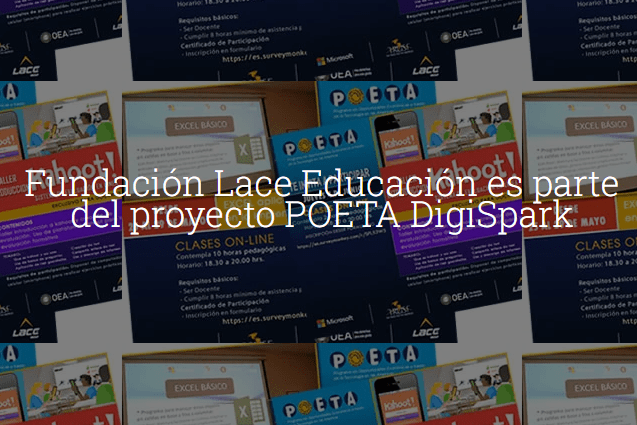
The Lace Education Foundation in Santiago, Chile—committed to growth and social development through technology—sought a new way to maintain a presence in nearby communities in the Metropolitan Region, initiating a shift in how it engaged with these communities as a result of the pandemic, without realizing the significant impact this would have. Starting on March 16, schools were closed nationwide, and quarantines began in the following weeks in various provinces across the country—measures that remain in place to this day. This shift involved moving from guided or closed-door sessions with a very specific and well-known group of participants in the districts of Maipú, Peñalolén, Santiago Centro, and Peñaflor to a new approach to delivering courses via technology—specifically, by offering them on online platforms. As we embarked on this new beginning—with the hope and confidence that we could best serve the group that would join us—we decided to start with the “Teachers” segment, offering a virtual class that would provide the necessary tools to make the session effective and impactful in helping participants understand and grasp the material. so we implemented interactive screens and a video conferencing platform for collaborative work that was lightweight and easy for participants to use. Another significant aspect of our first presentation was combining two elements currently essential to teaching in Chile: Excel and its application in Decree 67, which establishes the minimum standards for assessment, grading, and promotion for all students in Chile and took effect in March 2020. When registration opened—supported by 100%’s technology and with the goal of reaching a sufficient percentage of teachers to help us address or resolve challenges facing growing vulnerable communities—the response from participants was overwhelming and exciting, as the registration slots filled up to the maximum capacity in less than 7 minutes. Additionally, and to our great surprise, the registered participants came not only from the metropolitan area, as had been anticipated and planned, but also included teachers from all over Chile, with diverse backgrounds and teaching methods; and about 50% of them came from areas in need of new opportunities, and through these teachers, we are able to support the empowerment of communities and the application of new technologies in learning in a more comprehensive way. We currently have various courses scheduled for the different groups of people identified by POETA, and thanks to the support of the trainees themselves, we will continue this work for a long time to come, as they have generated increased demand—especially from areas outside the capital—for the courses we are offering online.

The Lace Education Foundation of Santiago de Chile did not imagine the impact its adaptation during COVID-19 would have Read More »

Proyecto VIVE reunió a 22 egresadas en \”Tardes de C@fé con heroínas\”

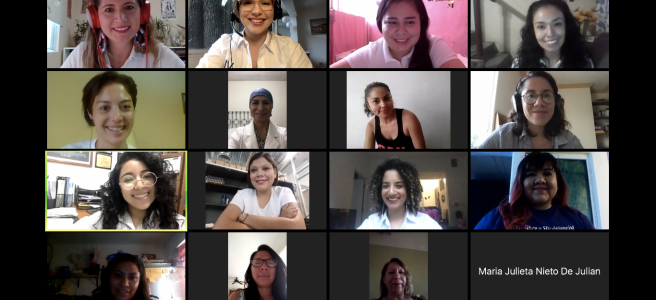
Ciudad de México, 5 de junio. Eran las 4:55 y el equipo operativo del proyecto estaba terminando de repasar el guion del evento, todas uniformadas con camisetas de Proyecto VIVE, conectadas y listas. A las cinco en punto comenzamos a dar acceso a las mujeres participantes, de música de fondo se escucha Bossa Nova, tuvimos que pedir refuerzos de Washington para poder ambientar nuestro cafecito. A la llegada de cada participante, María Fernanda Sierra, Gerente de Proyecto VIVE, con su acento colombiano energetizante las saludaba afectuosamente “Hola Angy! Esta vez será virtual, pero recuerdo aquel chocolate calientito que nos tomamos el año pasado\”. Muchas prenden y apagan la cámara, también los micrófonos, se escucha algún noticiero en el fondo. Elizabeth Laredo, Oficial de Oportunidades Económicas de Proyecto VIVE nos comienza a guiar por la plataforma de zoom. El evento se titula C@fé con Heroínas y lo que se busca es compartir las experiencias de mujeres extraordinarias, mujeres aliadas y egresadas de Proyecto VIVE que día con día realizan grandes hazañas para apoyar a otras mujeres, impulsar sus negocios y superarse profesionalmente. Con motivo de la contingencia sanitaria por el COVID-19 retomamos estos espacios de manera virtual, y al día de hoy hemos celebrado dos ediciones, el 20 de Mayo con mujeres de Celaya, Guanajuato y  el 27 de mayo con mujeres del estado de Yucatán. Comenzamos la reunión con una presentación de superpoderes, cada una presenta su nombre y un superpoder que le gustaría tener y/o una palabra que relacionen con Proyecto VIVE. En el C@fé de Celaya Cecilia nos dijo que le gustaría “volar para conocer muchos lugares”, a Magdalena “regresar el tiempo, para disfrutar momentos felices y corregir otros”, a Nancy “ser adivina para anticiparse a las cosas”, a Flor “no cansarse nunca tanto física como mentalmente”, Isabel quisiera “sanar a las personas” y María Julieta que “todos tengan el valor de creer en su potencial”. En el C@fé de Yucatán Dalila nos compartió que para ella Proyecto VIVE significa “Aprendizaje”, para Tania “Oportunidad”, para Wendy “Fuerza”, para Lessly y para Aime “Apoyo”, para Alba “Motivación cada día”, para Gloria “Resurgir”, para Marisol “Hermandad”, para Ligia “Solidaridad y Amistad” y para Lucía “Aprendizaje y Amistad”. María de los Ángeles Hernandez, aliada de Proyecto VIVE y Directora de Coordinaciones Regionales del Instituto de la Juventud Guanajuatense, nos compartió que ella ha podido liderar, aprender y adaptarse al uso de redes sociales para informar a la sociedad, y sobre todo para impulsar ideas y emprendimientos de jóvenes; pero también para estar en contacto con su familia en estos momentos difíciles. Nallelly Hernández aliada de CREA y facilitadora en Yucatán de los cursos de VIVE nos compartió que cuando ella llegó a VIVE le dieron un número de personas a capacitar, una meta, pero que nunca se imaginó todo lo que ella aprendería de las mujeres “aprendí de su sentido de resiliencia, de su ejemplos, y son vidas que se sumaron a la mía y se van a quedar en mi corazón para siempre”. Magdalena Hernández abrió con una reflexión sobre cómo afrontamos los problemas en la vida: “lo importante no es preocuparnos, sino ocuparnos”, eso lo aplicó a su negocio “A lavar y a Planchar” en la ciudad de Celaya. “Magda” para quienes le hemos agarrado cariño especial por su pasión y profesionalismo. Ella nos contó que en cuanto empezó la contingencia, la primera acción que tomó fue mandar a las personas vulnerables a sus casas con goce de sueldo. Enseguida adoptó medidas de higiene y sanitización para continuar operando, ofrece gel antibacterial a sus clientes cuando entran y salen; reciben la ropa con guantes; promueve el lavado constante de manos de personal, “eso sí, con cremita para humectar las manos” y sanitizan las lavadoras constantemente. A sus clientes, proveedores y vecinos les da lo que llamamos en Proyecto VIVE, el “Factor WOW!” que consiste en ir más allá, lo hace al regalarles cubrebocas que elabora con retazos de telas. Dalila Casanova de Muna, Yucatán, con su emprendimiento “Libretas Nirvana” es un verdadero ejemplo de perseverancia y plenitud, a sus más de 60 años decidió emprender y aunque entonces “no sabía ni prender una computadora, con VIVE he aprendido eso y más”. Ahora tiene páginas en todas las redes sociales y hasta un canal de Youtube, ha diversificado sus productos y hace libretas y bolsas artesanales bordadas. Ella compartió que durante este confinamiento se ha sentido con mucho dolor porque no ha podido ver a su nieta, a veces tiene insomnio, pero cuando eso pasa “yo me levanto y sigo trabajando”. Gracias al curso virtual de Proyecto VIVE me “han llovido encargos, pero no sé cómo mandarlos a Estados Unidos”. Pero justo para eso es este c@fé, no faltaron consejos y recomendaciones que compartieron las demás mujeres a Dalila. El c@fe con duración de dos horas se fue volando, se platicaron muchas otras experiencias, para seguir adelante; pero también ansiedades, tristezas y miedos, se compartieron consejos útiles para mantener la salud física y mental, sitios de meditación, podcasts, ejercicios y palabras de aliento. El mantra que se repitió de manera constante fue “no estás sola”, buscando con ello tender manos y corazones entre todas. Finalmente, Klaudia González, Coordinadora Nacional de Proyecto VIVE nos deseó poder salir pronto de esta contingencia, reconstruirnos en este proceso, pero sobre todo “conscientes de que debemos seguir siendo la persona más importante de nosotras mismas”. ¿Te gustaría ser parte de la comunidad de egresadas del Proyecto VIVE? puedes cursarlo en: https://aulavirtual.trustfortheamericas.org/ El Proyecto VIVE es implementado por The Trust for the Americas gracias al apoyo de Walmart Foundation. Entre 2016 y 2019 capacitó a más de 50 mil mujeres nivel nacional. Asimismo, más de 7 mil personas fueron vinculadas a oportunidades económicas (86% mujeres, 60% fueron vinculadas a un trabajo de tiempo completo y el 21% se auto-emplearon o iniciaron proyectos de emprendimiento).

Proyecto VIVE reunió a 22 egresadas en \”Tardes de C@fé con heroínas\” Read More »

INTERSECTION: conversations and useful tips for female entrepreneurs in times of COVID-19

Hablar de la incertidumbre mundial ocasionada por la contingencia sanitaria del COVID- 19, así como sus efectos en materia sanitaria, social, política y económica, es un tema relevante en la actualidad y que seguirá presente para muchas personas, en materia de recuperación económica en los próximos meses. Para las micro y pequeñas empresas, esta situación ha permitido explorar otros escenarios, canales y plataformas de mercadotecnia, ventas y gestión de recursos; visualizando el desafío, como un momento de oportunidad, reinvención y evolución.   Esta realidad deja entrever que debemos poner foco a los aprendizajes derivados de esta pandemia y sumar esfuerzos. Acercar propuestas alternas y contenidos creativos que generen valor a las personas, es uno de los objetivos para Proyecto VIVE para que las mujeres a las que beneficiamos, tengan más y mejores herramientas para seguir adelante y construir un presente y un futuro mejor. Hoy presentamos el podcast “Intersección”, una iniciativa innovadora de Erik López y Eduardo Almanza en la que confluyen tiempo, creatividad, conocimiento y experiencia, en medio del confinamiento social. En este espacio, se comparten semanalmente temáticas relevantes para innovar y generar oportunidades económicas, con un enfoque no convencional, que permitirá a personas como tú, como yo, y a las emprendedoras y egresadas de Proyecto VIVE, identificar, replantear, desaprender, aprender, redescubrir  habilidades, talentos,  capacidades mediante una serie de  recomendaciones, consejos y herramientas  en un entorno muy natural.                      ¿En qué consiste Intersección? Intersección es un programa en formato Podcast. En cada episodio se abordan diversos temas relacionados con empleo, emprendimiento, manejo de crisis y conflictos. También se citan historias de éxito, incluidas las de egresadas de Proyecto VIVE. Los conductores hacen referencia a un término muy innovador durante las sesiones: Desaprender, como base del resurgimiento de oportunidades y nuevos aprendizajes. Intersección es un canal para construir comunidad con aquellas emprendedoras y emprendedores que requieran visibilidad de sus productos o servicios.   Intersección también tiene para ti algunas sorpresas que te ayudarán a identificar fortalezas y áreas de oportunidad para mejorar tu perfil laboral y/o negocio, retar el estatus quo y exponer tu talento con herramientas estratégicas. Te invitamos a visitar su tarjeta virtual y seguir sus emisiones: https://meishy.com/interseccion/  Nuestros hashtags #ProyectoVIVEmx #Trust4Americas

INTERSECTION: conversations and useful tips for female entrepreneurs in times of COVID-19 Read More »

4 LESSONS ON OPEN GOVERNMENT DURING COVID-19

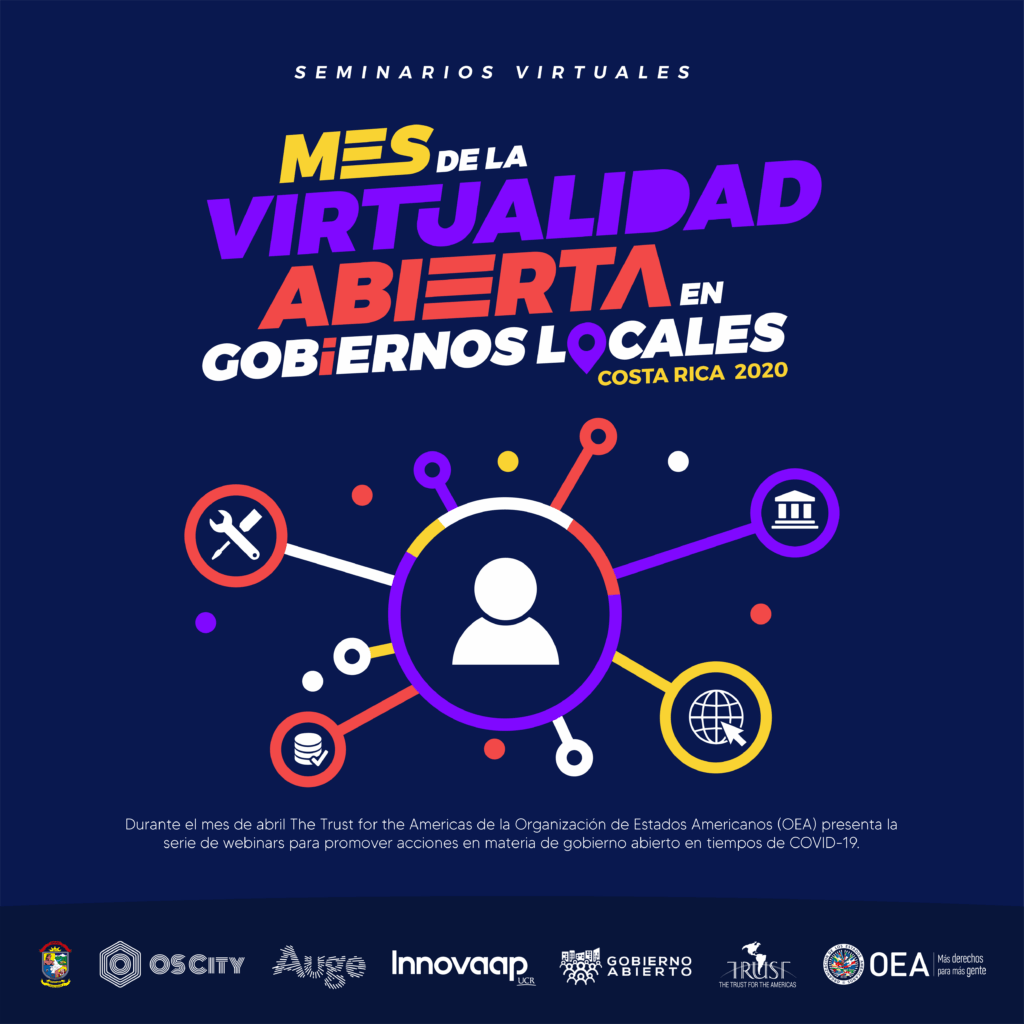
por Jorge Umaña Durante el mes de abril The Trust for the Americas desarrolló una serie de webinars para promover acciones en materia de gobierno abierto en tiempos de COVID-19. Esta iniciativa se implementa en el marco del proyecto “Mejora de los servicios del gobierno municipal a través de la innovación y las redes locales” implementado en Costa Rica. El objetivo de esta iniciativa fue acercar a diversos gobiernos locales y subnacionales a una serie de herramientas y mecanismos que facilitan su gestión en tiempos de COVID-19 y utilizando los principios del gobierno abierto (transparencia, participación, colaboración e innovación). De esta manera y producto de las enriquecedoras conversaciones generadas por lo ponentes y participantes de los seminarios virtuales, logramos llegar a importantes conclusiones que pueden fortalecer la gestión local de los gobiernos. Entre ellas: Se pueden ver los videos de los webinars aquí: La tecnología es un aliado para transparentar procesos y entender requerimientos y necesidades ciudadanas. Se analizó a profundidad junto a nuestro socio OS City las herramientas digitales que impulsan la escucha ciudadana, la rendición de cuentas y la trazabilidad de procesos gubernamentales para atender la pandemia del COVID-19. Por ejemplo, con City Listener se conectan múltiples fuentes de información para escuchar las necesidades emergentes, georeferencias y violaciones a la cuarentena, estatus de abastecimiento de hospitales, entre otras cosas. También con la plataforma de Blockchain Certificates se puede certificar a procesos y personas asegurando que no propagan el virus a causa de actividades que hoy en día se realizan de manera manual y presencial. El acceso a la información pública y los datos abiertos son un mecanismo de control institucional y ciudadano en tiempos de crisis. Con la experiencia de la  Municipalidad Esparza (Costa Rica) se pudo conversar y constatar sobre los beneficios que generan los datos abiertos para el bienestar de la ciudadanía. Así como, los procesos necesarios para organizar internamente a una institución para publicar datos abiertos en portales municipales. Por otra parte, en un contexto de COVID-19, se destacó la importancia de que los procesos de apertura de datos respondan a la demanda de ciudadanía, como por ejemplo, datos de casos de COVID-19, beneficios brindados por los gobiernos, medidas implementadas por los gobiernos, entre otros. En tiempos de crisis es necesario contar con procesos y trámites ágiles que mejoren la relación entre los gobiernos y las personas. Los trámites cumplen una función básica: conectar a las personas y a las empresas con los servicios y las obligaciones del gobierno. En un mundo ideal, serían intuitivos, rápidos y transparentes, se harían en línea y las instituciones públicas se coordinarían para que el ciudadano tuviera que esforzarse lo mínimo posible. Sin embargo, el escenario es totalmente contrario y para cambiar este contexto se requiere de procesos de colaboración entre el sector públicos y los demás actores sociales (sociedad civil, academia, sector privado, otros) para asegurar es los trámites respondan a las necesidades y capacidades de la sociedad. Para ello Innovaap-UCR demostró que con la metodología coLABora se pueden desarrollar procesos colaborativos e innovadores para simplificar y digitalizar trámites. Con esta experiencia se ha logrado evidenciar la importancia de hacer mas eficiente la gestión municipal para simplificar la vida de la ciudadanía. Las instituciones gubernamentales deben canalizar esfuerzos para ser interlocutores entre los emprendedores locales y el gobierno central. Una de las políticas más visibilizadas en materia de desarrollo económico en cualquier país, es la promoción de emprendimientos locales. Es por ello que en este contexto de COVID-19, de confinamiento y distanciamiento social, el sector de emprendimientos han sido y serán los mayormente afectados por la crisis económica producto de la pandemia. Ante ello es necesario e importante que los gobiernos locales generan acciones de empatía, autoconocimiento, colaboración, experimentación y formación para superar los obstáculos de una crisis de este tipo. En este espacio y cómo en los anteriores se destacó la importancia de implementar tecnología en los emprendimientos pues genera oportunidades de subsistencia y sostenibilidad financiera de las iniciativas de emprendedores y emprendedoras locales. Jorge es Coordinador Regional de Gobierno Abierto para The Trust for the Americas

4 LESSONS ON OPEN GOVERNMENT DURING COVID-19 Read More »

To participate, it is important to read the Call for Applications for the ”Virtual Tianguis VIVE”

Join us for the “National” edition on September 18, 2020! The global crisis caused by COVID-19 has led us to turn to virtual platforms as a tool to continue and expand our projects. In this context, Trust for the Americas, through the VIVE Project, aims to highlight the ventures of its graduates to recognize their efforts and connect them with potential clients.  Below are the requirements for joining the tenth “National” edition on September 18, 2020.

To participate, it is important to read the Call for Applications for the ”Virtual Tianguis VIVE” Read More »

Innovation in a constantly changing world

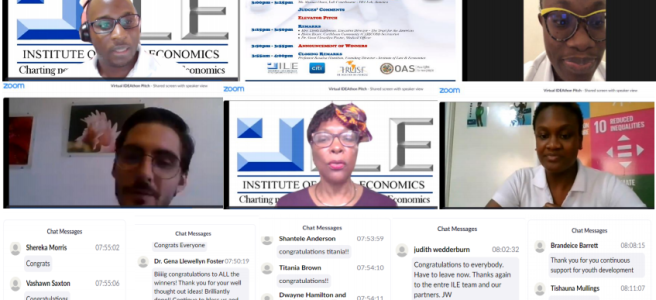
In social sciences, there are two main ways in which change comes about: by evolution or by revolution. Although not all change may be positive on an individual level, I believe both are necessary and healthy processes to the advancement of society as a whole. However, the key lies in understanding the processes that are underway, and thus, better adapting to these changes. In the technology sector, this has also shown to be the case. It quickly comes to mind the two highways on which most of the technologies and innovations move forward: the constant, steady pace innovation that builds upon preexisting models, and versions of itself; and the radical, disruption innovation that fundamentally changes the board. Of course, weighing one over the other is a discussion for another opportunity. But where I want to draw attention today, is to its inevitability nature. When revisiting the late 6th century B.C.E. Greek philosopher Heraclitus\’ famous quote: “The only thing that is constant, is change”, the message seems pretty straight forward. The idea of this fundamental constant is what sat his line of thought aside from any of his contemporaries; immortalizing his contributions to the ongoing scrutiny of the nature of reality itself. Heraclitus believed that the world (reality) is not to be identified with any particular substance, but instead with an ongoing process governed by a law of change. And setting aside the obvious differences between his time and ours, I find that that core principle is still intact today. I believe that to millennials and generation Z, this could be the year that embodies the word \’change\’ more than any other we’ve experienced so far. The curious thing is that these generations were already the \’fast phased\’ and \’quick change\’ generations. From threats of an escalating military conflict with Iran in January to raging wildfires in Australia in February, all the way to COVID-19 pandemic in March, this year has started at a vertiginous pace. Naturally, here at the Trust, we were also taken aback by the disruptive nature of the crisis, and pre-quarantine implementation plans had to be completely reshaped and reworked. Although all of our programs had to adjust to a virtual format, due to the strict stay-at-home measures imposed, the DIA Urban Lab, a Citi Foundation and Trust for the Americas\’ initiative, had to adapt one of its major events: The Urban Ideathon. This two-day workshop is, in essence, an in-person, collaborative event that thrives on bringing participants into close contact to foster to work together. Therefore, the challenge ahead was evident. All of a sudden we needed to adapt on the go to a game-changing event. The first thing we had to do, was innovate by reimagining our event. Participants were tasked with finding solutions to mitigate the impact of the pandemic around 3 core themes: Economic relief, Education and Access to Information, and Health and Security. This served as a platform for youth to start their long-term projects. The Institute of Law and Economics, our local partners in Kingston, managed to virtually rally over 120 youth during the weekend of April 4-5, to form working groups, come up with solutions, develop their prototypes and finally pitch their ideas to a panel of judges. From developing portable ultraviolet germicidal irradiation technology to food delivery and storage system to help mitigate potential food shortages in the country, and to eLearning websites; initiatives were presented to address an array of issues and problems that arise in this global crisis. By the end of the Ideathon, a total of 36 innovative initiatives were presented, and the best innovative ideas received an economic incentive to further develop their solutions. But, at this point, you might be asking yourself: if every single person with internet access on the planet is resorting to the virtual world to somewhat carry on their pre-quarantine lives, what\’s the innovative element of this particular event? Well, it clearly wasn\’t making it a virtual event. But, by incorporating the context -of COVID-19- into the main narrative, we manage to transition from a virtual two-day workshop that is all about the \’pre-quarantine life\’; into one that fully embraces quarantine life, and contributes to mitigating its impact. To me, Innovation was never about big investments, state-of-the-art technology, nor miracle apps. It\’s about seeing where the currents of history are flowing, and choosing the right vessel to navigate them.

Innovation in a constantly changing world Read More »

NCB Icon Lab: Boosting Digital Skills and Entrepreneurship in Jamaica

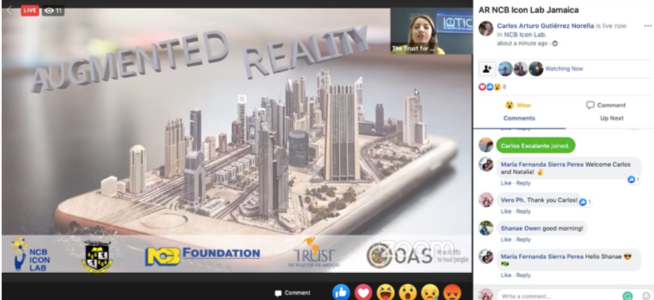
During the months of March and April, we successfully kick-started NCB Icon Lab’s virtual “Train-the-trainers” (TTT), with kind support from NCB Foundation. The sessions will build the capacities of two of our local partners in Jamaica: The Mico University and the Institute of Law & Economics (ILE). To promote social distancing, we adapted the in-person training to be provided via Facebook Live and video conferencing platforms. These interactive formats have proven extremely successful and engaging as participants interact with the speakers in real-time, share their thoughts or questions, and test their learnings through interactive games. Mico and ILE’s faculty started their training by getting familiarized with The Trust’s innovation labs in Mexico, Colombia, and Jamaica. Maria Liliana Mor, Director of Programs at The Trust, shared the Labs’ success stories and best practices. Committed to measuring digital, life, and entrepreneurial skills, professors of Mico and ILE learned how to use Helelab’s Future Skills Tool.  This tool will enable the evaluation of the participant’s “digital genome” and digital competences, aligned with the European Commission Digital Competences Framework. Furthermore, professors also learned how to input data on the TIS (Trust’s Information System). Let’s talk about the future of work skills With international companies increasingly looking at Jamaica as a country for outsourcing animation production, according to the World Bank, we’d tap on the creative talent of Jamaican youth providing Augmented Reality (AR) training. The AR sessions, facilitated by Natalia Noreña from IoTIC, will familiarize participants with advanced components of AR. IoTic is a business founded by Carlos Noreña, one of the Trust’s first beneficiaries from our DIA Lab in Colombia, who is now a business owner and a partner to The Trust! Learning AR is the first step for youth to engage with the 4th industrial revolution technologies. A first practical application will be to challenge participants to use AR to present their business models and their pitch. “Through this technology, the possibilities are endless!” a Mico professor shared. Ready, Set, Go Pitch! Continuing to foster innovation in Jamaica, The Trust’s partner, ILE, is providing Innovation Methodology Training based on The Trust’s ICI component: Inspire, Create and Innovate. Shanae and Dwayne, ILE’s experienced facilitators, are presenting a series of tools and best practices to support the creation and strengthening of entrepreneurship. They will present best practices on how to operate an Innovation Lab, how to organize a Pitch Tank and Ideathon, how to develop a Business Model using Canvas, tips to engage youth, among others. These successful and engaging TTT sessions demonstrate how The Trust for the America’s, with the support from NCB Foundation, is committed to strengthening its partners’ capabilities, encouraging innovation, and fostering digital inclusion and economic opportunities in the Caribbean.

NCB Icon Lab: Boosting Digital Skills and Entrepreneurship in Jamaica Read More »