

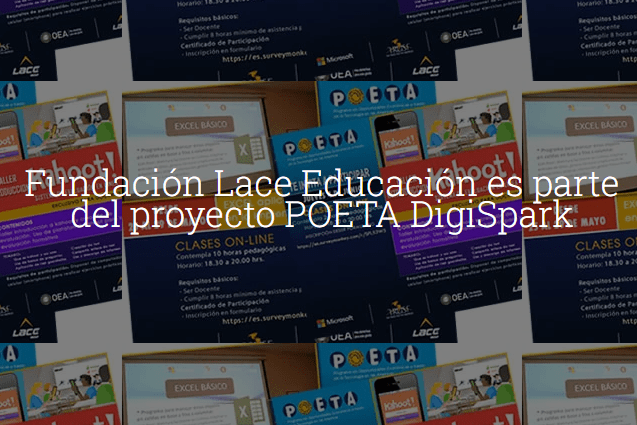
The Lace Education Foundation of Santiago de Chile did not imagine the impact its adaptation during COVID-19 would have
The Lace Education Foundation in Santiago, Chile—committed to growth and social development through technology—sought a new way to maintain a presence in nearby communities in the Metropolitan Region, initiating a shift in how it engaged with these communities as a result of the pandemic, without realizing the significant impact this would have. Starting on March 16, schools were closed nationwide, and quarantines began in the following weeks in various provinces across the country—measures that remain in place to this day. This shift involved moving from guided or closed-door sessions with a very specific and well-known group of participants in the districts of Maipú, Peñalolén, Santiago Centro, and Peñaflor to a new approach to delivering courses via technology—specifically, by offering them on online platforms. As we embarked on this new beginning—with the hope and confidence that we could best serve the group that would join us—we decided to start with the “Teachers” segment, offering a virtual class that would provide the necessary tools to make the session effective and impactful in helping participants understand and grasp the material. so we implemented interactive screens and a video conferencing platform for collaborative work that was lightweight and easy for participants to use. Another significant aspect of our first presentation was combining two elements currently essential to teaching in Chile: Excel and its application in Decree 67, which establishes the minimum standards for assessment, grading, and promotion for all students in Chile and took effect in March 2020. When registration opened—supported by 100%’s technology and with the goal of reaching a sufficient percentage of teachers to help us address or resolve challenges facing growing vulnerable communities—the response from participants was overwhelming and exciting, as the registration slots filled up to the maximum capacity in less than 7 minutes. Additionally, and to our great surprise, the registered participants came not only from the metropolitan area, as had been anticipated and planned, but also included teachers from all over Chile, with diverse backgrounds and teaching methods; and about 50% of them came from areas in need of new opportunities, and through these teachers, we are able to support the empowerment of communities and the application of new technologies in learning in a more comprehensive way. We currently have various courses scheduled for the different groups of people identified by POETA, and thanks to the support of the trainees themselves, we will continue this work for a long time to come, as they have generated increased demand—especially from areas outside the capital—for the courses we are offering online.