
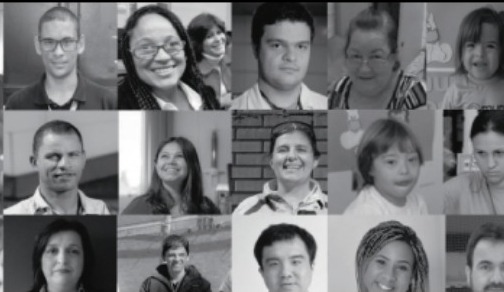
On August 16, UNILEHU (Free University for Human Efficiency), a local partner of The Trust for The Americas since 2015, celebrated 17 years of work toward inclusion. The institution’s history began in 2003 with the goal of promoting the inclusion of people with disabilities in the labor market. On August 16, 2004, President Andrea Koppe signed the document that marked the beginning of the institution’s journey.
Andrea says: “Unilehu started with the idea that it was possible to include people with disabilities in the labor market. We invited hundreds of companies to join forces. Within a few months of mobilization, ten of them accepted the challenge of becoming more inclusive companies. The word, the will, and the team's commitment made a dream come true, proving that together we are stronger to change the world.”.
Today, 17 years after its founding, Unilehu is a benchmark in the state of Paraná and one of the leading institutions in Brazil serving all diversity audiences. Vice President Yvy Abbade celebrates the work that has been carried out and says: “The breadth of the work that has been developed gives us the certainty that inclusion, diversity, and equity overcome barriers and cannot be achieved by a single person. It is the mission of society as a whole.”.
Regarding the work being done, Andrea Koppe says: “I am very proud to have been part of one of the greatest inclusion movements in Curitiba.” The president concluded.
Unilheu is one of the POETA Social Franchise organizations and carries out the DigiSpark 2021 Project in different cities in the States of Paraná and Rio de Janeiro, serving all diverse audiences in training and insertion into the labor market.
POETA DigiSpark is funded by Microsoft and implemented by The Trust for the Americas in Argentina, Brazil, Chile, Colombia, Mexico, Peru, and the Dominican Republic through 18 local partners. Since the project’s launch in 2013, POETA DigiSpark has provided training to more than 42,000 participants. In addition, it has facilitated nearly 16,700 economic and educational opportunities in Latin America and the Caribbean.