
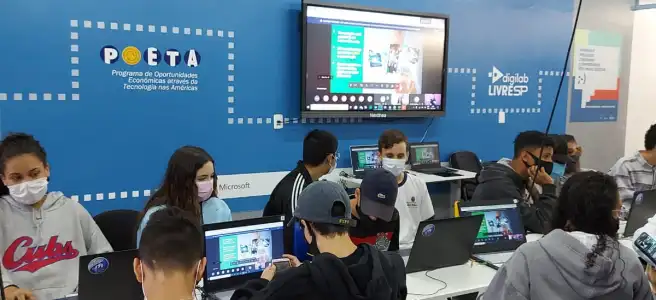
Throughout November and December, The Trust for the Americas and the local partners of the POETA Social Franchise joined forces with Code.org to promote “Hour of Code” in Latin America.
Lara Sepúlveda, Partnerships Manager at Code.org, delivered the training “Coding with Minecraft and Flappy Code” in Spanish and Portugal, to prepare representatives of FSP's partner organizations so they could replicate this training among their beneficiaries.
This 2021, the Hour of Code had a different dynamic. We started on November 17 with a training session led by Maite Capra, POETA Regional Coordinator, who, thanks to her experience, passed on her knowledge to facilitators from the various organizations that make up the FSP network. With this, local partners were empowered to replicate such an interesting session.
Following a strong commitment from local partners and Trust coordinators, on November 19, the local partners in Brazil held their first meeting—an introductory session—organized by Fatima Galeazzo, National Coordinator – Brazil. More than 180 people attended, representing the following organizations: ITI – Instituto Tecnológico Inovação, Unilehu, OSJC – Obras Sociais Jerônimo Candinho, IDEAR, and Casa dos Sete. The session was rich in diversity, as the entire POETA team also participated.
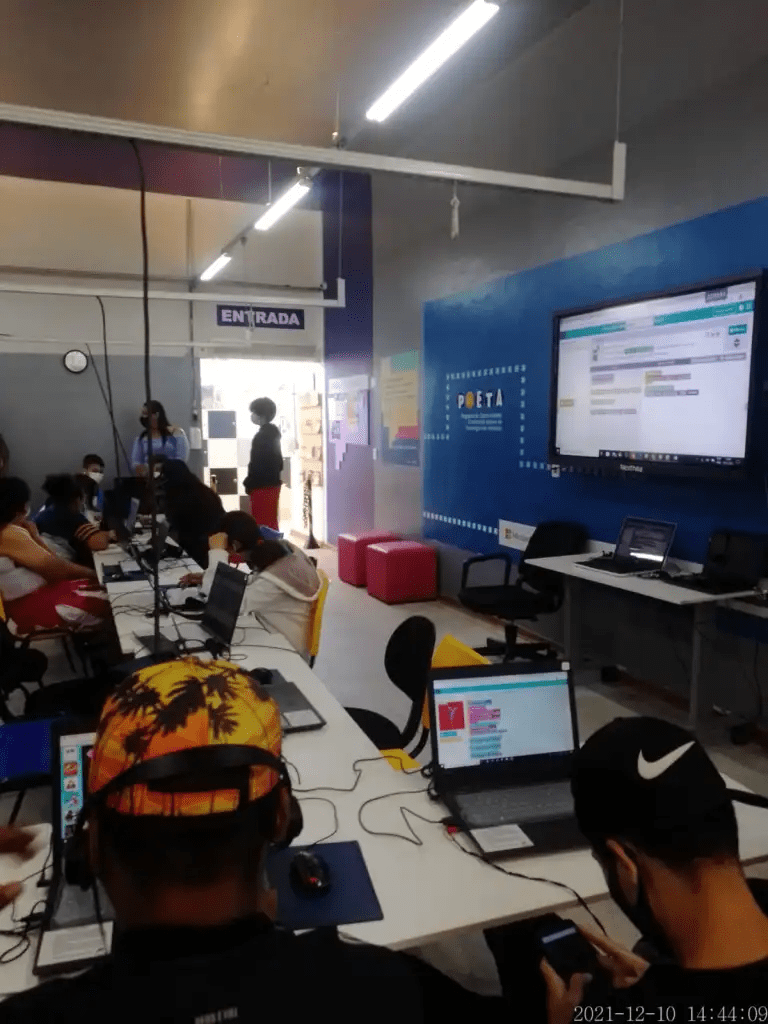
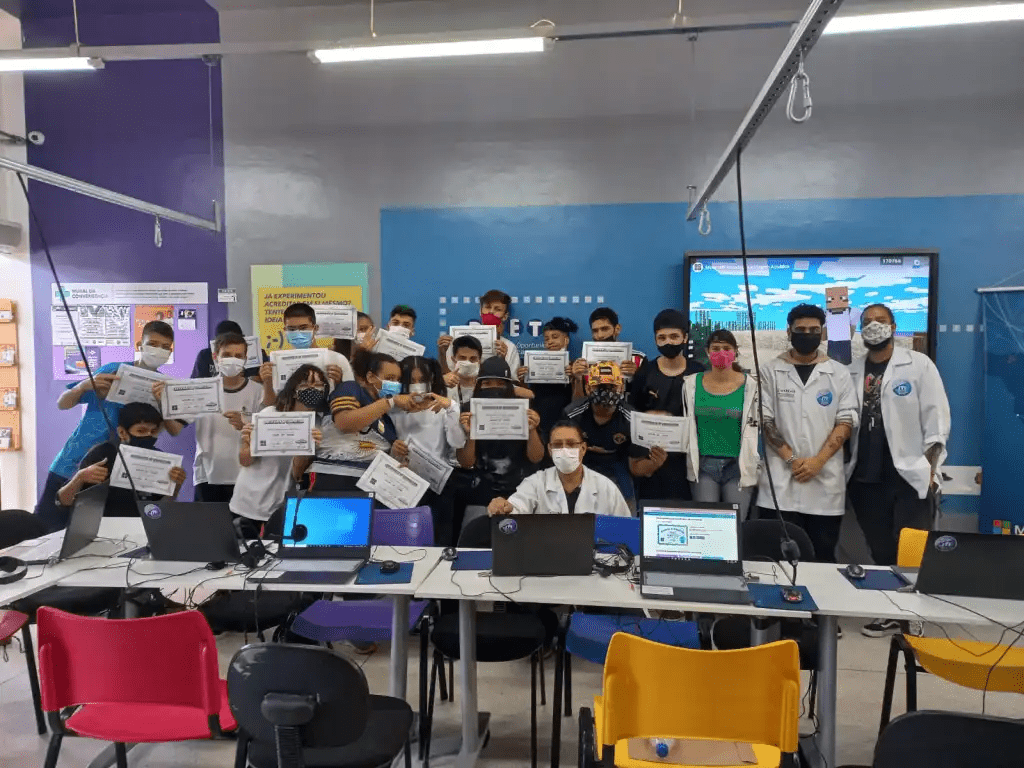
Following this interesting session, the partner institutions replicated the Hour of Code training among the beneficiary population, reaching over 417 people of all ages, from children to older adults.
The Local Partners of Colombia and Ecuador were the second to meet to celebrate the Hour of Code, an interesting session full of diversity. After the greeting from the POETA team responsible for these locations: Diana Andrade, Mónica Delgado, Luz Marina Correa, and María Camila Guerra, it was the Fundación Ayuda para la Autoayuda Ecuador that conducted the “Programming with Minecraft” training.
This session reached 43 people connected simultaneously via Microsoft Teams, but in addition, institutions such as: Fundación Ayuda para la Autoayuda Ecuador (Ecuador), Microempresas de Colombia (Colombia), ParqueSoft Nariño (Colombia), and Politécnico de Occidente (Colombia), had the participation of more than 80 people, in person, of different ages, from boys and girls accompanied by their mothers, to adults.
Organizations from Chile also joined the initiative, with the participation of 19 representatives from four organizations that are part of the FSP. This session was interesting because it allowed the partners to get to know each other and exchange experiences, in addition to agreeing that, due to electoral issues in the country, they will work together to celebrate the Hour of Code during the month of January.
From Costa Rica, Hogar Siembra, a local partner of FSP, 40 young women learned to code in the “Hour of Code.” Venezuela was another local partner that added 15 young people; in both locations, participation was in-person, adding programming to their experience with technology.
Local partners in El Salvador managed to bring together more than 80 people both virtually and in-person, while the local partners who closed this wonderful campaign were from Mexico and Costa Rica, in a virtual session with the participation of 18 members from allied institutions, who received training from Lourdes Serrano, Coordinator of Mexico, and Maite Capra, Regional Coordinator.
Without a doubt, the Hour of Code was a great experience to “prove that anybody can learn the basics and broaden participation in the field of computer science.”.
According to Code.org, “The Hour of Code takes place each year during Computer Science Education Week.”