
By: Bibiana Castrillón, Psychologist at Laudes Infantis Foundation
Within the fourth technological revolution that began years ago, key tools are identified for the development of women's potential and capabilities.
Thus, within the experience of the Laudes Infantis Foundation, which for 23 years has accompanied hundreds of women in the territories of southern Bogotá, the broad and latent need is evident for girls, young women, and adults to advance toward the use of technologies, facilitating their comprehensive development, overcoming the traditional view that exclusively boxes them into a role as mothers, preventing them from building themselves in other aspects and roles from which they can contribute to their personal growth, communities, and society.
When talking about the EMPOWERMENT of women, we must necessarily mention the great collective and individual inequality they experience, and how these conditions restrict their abilities to develop processes of personal projection, decision-making, mobilization, and transformation, by not having access to information, tools, and possibilities to enhance their capabilities.
Limited access to technological tools is also usually accompanied by “social and cultural norms” that implicitly discriminate against women, due to scarce opportunities for academic training, precarious economic and labor conditions, life projects anchored in the care of other people, framed within their role of solving and improving the lives of others, without recognizing their interests, tastes, and abilities; where stereotypes, scarce participation, and education for submission foster inequality, the social gap, and
digital, of course.
In the decisive purpose of moving towards GENDER EQUITY, it is essential that both state and private entities, as well as organizations, take on the challenge of facilitating women's access not only to knowledge and skills development, but also to technological tools that provide them with the possibilities to: receive new information, discover their tastes and interests, develop their capacities as they self-recognize, encourage their motivation and the construction of life projects more focused on their personal growth, and their preparation for performance in labor and/or entrepreneurial fields, strengthening their autonomy.
Laudes Infantis, through teaching and learning scenarios, facilitates the construction of knowledge that springs from BEING and guides women toward paths for BUILDING EQUITY, where women and men can develop their full potential. The training, leadership, and community development activities being carried out as part of the Poeta DigisPark project—funded by Microsoft through our partnerships with Trust for The Americas-OAS—have yielded benefits in advancing innovative initiatives, in which the approach of
gender is an opportunity for replicating change through active participation, the development of citizenship, the construction of networks, and access to the restoration of rights for women, making education an experience for comprehensive development.
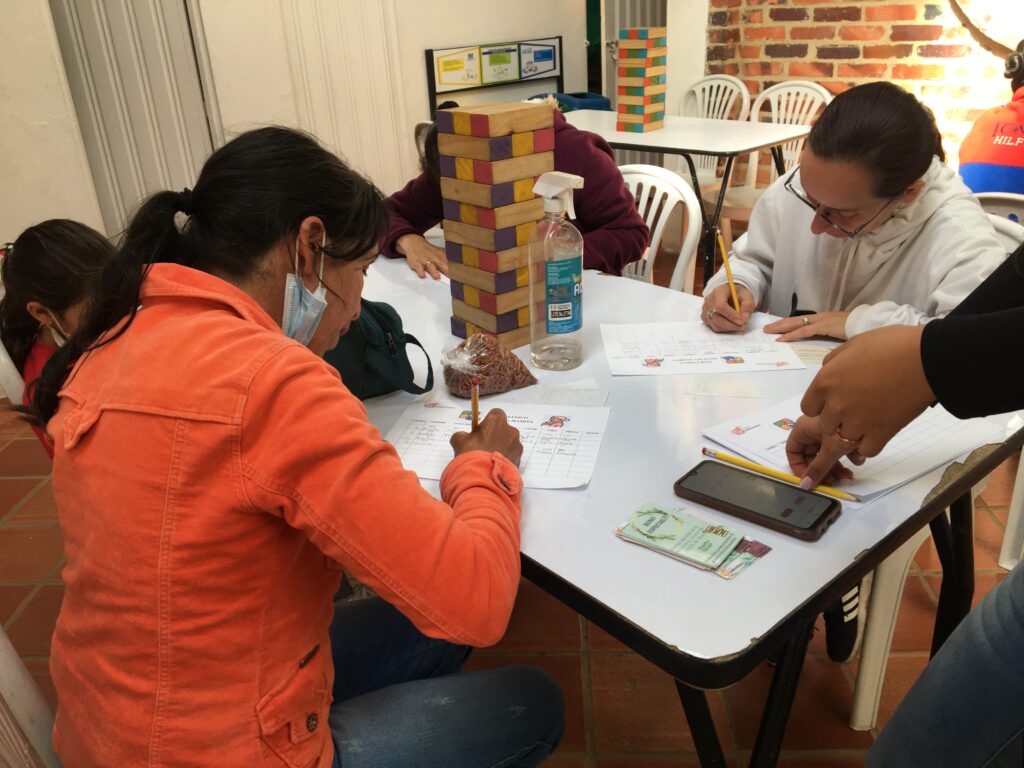
This is how, during this month of May, Mother's Month in much of the world, not only has it
celebrated and valued the care work carried out by the mothers participating in the project
Not only DigisPark, but the great possibilities it offers have also been shared with them.
technologies, for the construction of other roles that they can play in other areas of
society, asserting their potential as WOMEN. In addition, within the activity, it
They offered self-care spaces, raising awareness of the importance these spaces have
for energy recovery and project construction, especially for women,
educated for the care and permanent service of others, where there is never room
for themselves.
At Laudes Infantis, we believe it is the job of everyone that women of the 21st century do not
have only the option of being mothers, this being a fundamental role within the so-called
care economy, the basis of society, it is important that they are allowed to see from
girls the wide range of possibilities they can assume in building a better
society and for this technologies become strategic tools with which to achieve
that equality and equity we long for so much.